
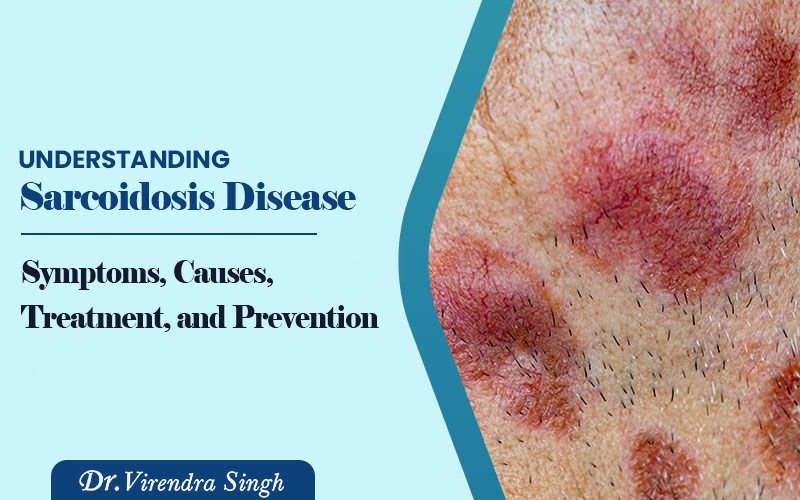
An inflammatory condition called sarcoidosis results in the formation of tiny clusters of immune cells called granulomas in a number of body organs. The precise etiology of these granulomas is yet unknown, but they are groupings of immune cells, including macrophages, that form in response to a trigger. Granulomas can change an organ’s structure and function over time. Sarcoidosis most affects the lungs and lymph nodes, but it can involve the eyes, skin, heart, liver, brain, spleen, and other organs. The disease may develop gradually or suddenly, and it may manifest with or without symptoms. The illness has an unpredictable course and is categorized as a multisystem granulomatous disease. It may go away on its own in certain situations, but in others, it may develop into a chronic condition that results in irreversible harm.
Dr. Virendra Singh is a renowned pulmonologist with extensive expertise in the diagnosis and management of Sarcoidosis, a complex inflammatory disease affecting the lungs and other organs. As a pulmonary physician with years of experience, he has helped many patients with precise diagnosis, individualized treatment regimens, and continuing care to control symptoms and avoid problems. Dr. Virendra Singh emphasizes a comprehensive strategy, enhancing patients’ quality of life by fusing advanced medical treatments with lifestyle advice. He is well-known for his sympathetic treatment of patients and in-depth knowledge of respiratory conditions, making him a reliable resource for anyone looking for information on how to effectively manage sarcoidosis.
Who is More Likely to Be Affected by Sarcoidosis?
All ages can be affected by sarcoidosis, although adults between the ages of 20 and 40 are most likely to get it. The illness affects women slightly more often than it does men. Sarcoidosis is more likely to occur in people with a family history, which may indicate a hereditary component.
Common Symptoms of Sarcoidosis
- Shortness of breath
- Persistent dry cough
- Fever
- Fatigue
- Chest pain or discomfort
- Swollen lymph nodes
- Weight loss
- Eye redness, pain, or blurred vision
- Skin rashes or reddish bumps (often on the shins)
- Enlarged liver or spleen
- Joint pain or stiffness
- Neurological symptoms (eg, numbness, facial paralysis)
- Heart rhythm problems
What Causes Sarcoidosis?
- Genetic Predisposition: The condition is more common in people with a family history, which may indicate that inherited immune system characteristics are involved.
- Environmental or Occupational Exposure: Mold, dust, insecticides, chemicals, or other airborne irritants have been studied as potential triggers.
- Infectious Agents: Although no particular infection has been firmly shown to cause sarcoidosis, some evidence points to a connection with microorganisms like Mycobacterium tuberculosis or Propionibacterium acnes.
- Autoimmune Mechanism: The condition might be an example of immunological dysregulation, in which the body misinterprets its own tissues as dangerous.
How is Sarcoidosis Diagnosed?
- Physical Examination to assess symptoms like skin lesions, swollen lymph nodes, or cough.
- A chest X-ray looks for abnormalities in the lungs or enlarged lymph nodes.
- High-Resolution CT Scan for detailed imaging of the impacted organs, particularly the lungs
- Pulmonary Function Tests to analyze lung capacity and airflow.
- Blood Tests to check for indicators of organ function, calcium levels, and inflammation.
- Biopsy of Affected tissue (eg, skin, lung, lymph node) to confirm granuloma presence.
- Bronchoscopy with Lavage or Biopsy to get lung samples for examination.
- Eye Exam if eye involvement is suspected.
- ECG or Cardiac MRI if there are heart-related symptoms.
- PET scan or Gallium Scan to evaluate ongoing inflammation and organ involvement in complex cases.
- Exclusion of other diseases includes fungal infections or tuberculosis, which can also result in granulomas.
Treatment Options for Sarcoidosis
- As the illness might go away on its own, mild or asymptomatic instances should be regularly monitored.
- Corticosteroids, typically taken orally, are used to lower inflammation and inhibit the immune system.
- Immunosuppressive Drugs for individuals who require long-term care or who don’t react well to steroids.
- When treating skin lesions or elevated calcium levels, hydroxychloroquine may be used.
- Inhibitors of tumor necrosis factor (TNF) for severe or unresponsive sarcoidosis.
- Drugs for lung involvement that are inhaled and have fewer systemic negative effects.
- Organ-specific therapies, including eye drops for ocular symptoms or anti-arrhythmic medication for cardiac sarcoidosis.
- If there is a severe impairment in lung function, oxygen therapy is recommended.
- Pulmonary rehabilitation to improve breathing and physical stamina
- In rare instances of serious organ damage, surgery may be necessary (e.g., lung transplant).
Managing Life with Sarcoidosis
- Regular check-ups to track organ function and identify flare-ups in advance.
- Following a doctor’s prescription to reduce inflammation and avoid difficulties
- Healthy lifestyle choices include regular sleep, a balanced diet, and avoiding smoking
- Frequent exercise to preserve muscle strength and lung function, as tolerated
- Wearing sunglasses and going to regular eye exams are two ways to protect your eyes.
- Stress management techniques, such as yoga, mindfulness, therapy, or meditation, can reduce immune system triggers.
- Keeping an eye out for long-term drug adverse effects, particularly with steroids.
- Getting immunized to reduce the risk of infections while using immunosuppressants (as advised by a physician).
- Patient education helps identify warning signals, monitor disease activity, and comprehend symptoms.
- Participating in support groups to gain knowledge and emotional support from others’ experiences.
FAQs
What is Sarcoidosis?
Granulomas, which are tiny collections of immune cells, develop in several organs, most frequently the lymph nodes and lungs, in sarcoidosis, an inflammatory illness.
What causes Sarcoidosis?
Although the actual etiology is unknown, it is thought to be related to an overreaction of the immune system to unknown triggers, which could include environmental factors or diseases.
What are the common symptoms?
Symptoms may include persistent cough, chest pain, shortness of breath, skin rashes, fatigue, and swollen lymph nodes.
Which organs are most affected?
Although sarcoidosis can affect any organ, it most frequently affects the skin, eyes, lymph nodes, and lungs.
Can Sarcoidosis be cured?
There isn’t a recognized cure, but many cases get better with treatment or on their own.
