Every breath we take serves as a reminder of how essential our lungs are to our well-being. According to some research, the average adult breathes between 20,000 and 22,000 times a day. 13 quarts of air are processed every minute on average. Lungs are the primary respiratory organs that help transfer oxygen into the blood and expel carbon dioxide. However, lung disorders, particularly lung cancer, afflict millions of people globally each year, making it one of the main causes of cancer-related fatalities. Although many people believe that smoking causes lung cancer, there have been a number of cases of lung cancer in people who do not smoke or drink.
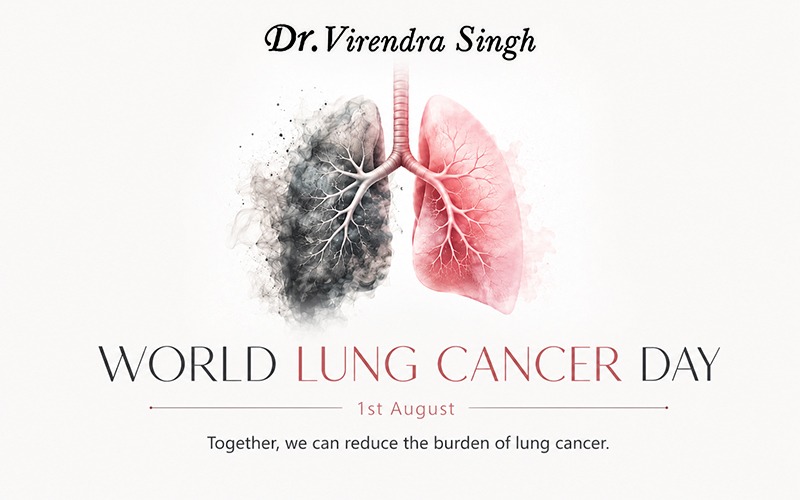
Every year on August 1st, World Lung Cancer Day 2026 is celebrated with the goal of raising awareness of lung cancer symptoms, promoting early screening, encouraging preventative actions, and supporting patients and caregivers who are fighting this illness. On the occasion of World Lung Cancer Day, Dr. Virendra Singh highlights the importance of understanding lung cancer symptoms, causes, treatment options, and the role of early detection in saving lives.
Common signs that shouldn’t be disregarded include a persistent cough, chest discomfort, shortness of breath, blood in the cough, and unexplained weight loss.
Why is World Lung Cancer Day Important?
Lung cancer is one of the most prevalent malignancies in the world, yet little is known about its indications, symptoms, and causes. Lung cancer is sometimes detected at an advanced stage, when it is difficult to treat, since people fail to recognize the symptoms or occasionally ignore them, mistaking them for other respiratory ailments. World Lung Cancer Day serves several important purposes:
- Raises knowledge of lung cancer symptoms
- Promotes smoking cessation and healthy lifestyles
- Encourages people at high risk to undergo screening
- Dispels the myth that lung cancer is exclusive to smokers
- Supports patients, survivors, and caregivers
- Advocates for better access to quality cancer life
Theme for World Lung Cancer Day 2026
The theme for World Lung Cancer Day 2026 (observed annually on August 1) is “Together through lung cancer,” a campaign focused on connection, understanding, and hope.
The theme emphasizes how crucial it is for everyone, regardless of background or circumstances, to have access to prompt screening, precise diagnosis, cutting-edge treatment, and compassionate care. Early diagnosis and improved outcomes can result from increasing knowledge about lung cancer, identifying its early signs, and promoting preventative actions. Together, by encouraging healthier lives, helping those impacted, and making sure that everyone has access to high-quality lung care, we can lessen the impact of lung cancer.
Types of Lung Cancer
Determining the best course of action requires knowledge of the many forms of lung cancer.
- Non-Small Cell Lung Cancer (NSCLC):- This is the most prevalent kind, making up around 85% of all cases of lung cancer. Depending on the stage, it often develops slowly and reacts favorably to surgery, targeted treatment, immunotherapy, or radiation therapy.
- Small Cell Lung Cancer (SCLC):- Small-cell lung cancer is less common but grows and spreads much more rapidly. It is often treated with chemotherapy, immunotherapy, and radiation treatment and is closely linked to smoking.
Lung Cancer Causes
There are a few other causes of lung cancer that people should be aware of, even if smoking is still one of the primary causes:
- Passive smoking (second-hand smoke)
- Air pollution
- Exposure to asbestos
- Occupational chemicals
- Radon gas exposure
- Previous radiation therapy to the chest
- Family history of lung cancer
- Certain genetic mutations
Crucially, a large number of lung cancer patients have never smoked. Therefore, it’s critical to be aware of and comprehend the additional typical causes of lung cancer
Lung Cancer Symptoms
Early detection of lung cancer symptoms can result in an earlier diagnosis, prompt treatment, and improved results. Common symptoms of lung cancer include:
- Persistent cough lasting more than three weeks
- Coughing up blood
- Chest pain
- Wheezing
- Shortness of breath
- Frequent chest infections
- Hoarseness of voice
- Loss of appetite
- Unexplained weight loss
- Bone pain
- Fatigue
- Headaches (if cancer has spread)
How is Lung Cancer Diagnosed?
A thorough medical history and physical examination are the first steps in diagnosing lung cancer. Some of the investigations doctors may recommend include:
- Chest X-ray
- CT Scan
- PET-CT Scan
- Bronchoscopy
- Needle Biopsy
- Endobronchial Ultrasound (EBUS)
- Molecular Testing
- Blood Investigations
Lung Cancer Treatment
The risk of lung cancer can be considerably decreased, even if not all cases can be avoided. Preventive measures include:
- Avoid smoking
- Quit tobacco in all forms
- Avoid second-hand smoke
- Maintain healthy indoor air quality
- Exercise regularly
- Reduce exposure to occupational chemicals
- Get regular health check-ups
- Eat a balanced diet rich in fruits and vegetables
- Discuss lung cancer screening if you are at high risk
FAQs
What is lung cancer?
The illness known as lung cancer occurs when aberrant cells in the lungs grow out of control.
What causes lung cancer?
Although smoking is the primary cause, exposure to dangerous chemicals, air pollution, and passive smoking can all raise the risk.
Why is early detection important?
Early detection improves treatment efficacy and increases the probability of survival.
How is lung cancer diagnosed?
Doctors may use imaging tests, CT scans, and biopsies to diagnose lung cancer.
What are the treatment options for lung cancer?
Treatment may include chemotherapy, radiation therapy, surgery, targeted therapy, or immunotherapy.
Can lung cancer be prevented?
Avoiding smoking, reducing exposure to pollutants, and regular health check-ups can lower the risk.