
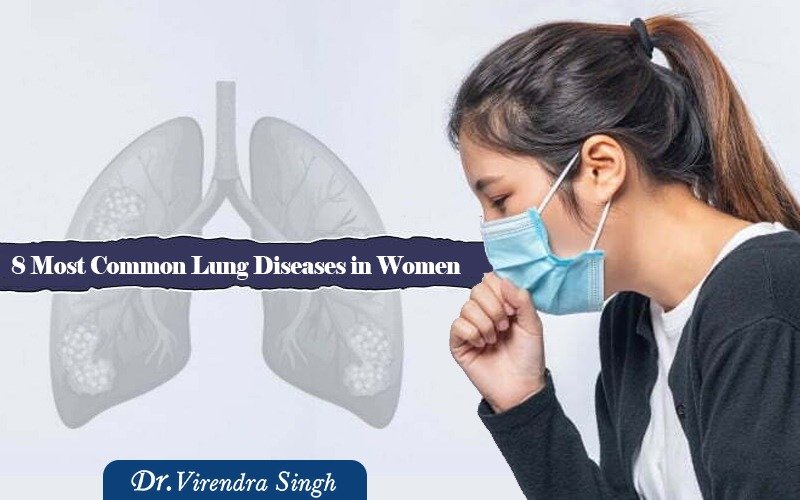
Do you know that on a normal day, you breathe nearly 25000 times? The component of your complicated system that takes in oxygen and expels carbon dioxide is your lungs. Unfortunately, lung disorders can arise from any kind of systemic issue. In today’s scenario, one of the most prevalent illnesses worldwide is lung disease. These lung diseases affect the lungs that allow us to breathe. They may result in breathing issues that limit the body’s oxygen intake.
Women are experiencing a sharp increase in lung disease, which has a negative impact on the body. Certain lung problems may result from your blood receiving less oxygen. Women are more likely than men to die from lung disorders each year. There are many different lung problems in women. A cold or allergy could be the first warning signs. Therefore, it is easy for us to ignore the early indicators of lung ailments. Common signs can include:
- Trouble breathing
- Frequent cough
- Shortness of breath
- Pain or discomfort during breathing
- Decreased ability to exercise
Dr. Virendra Singh, a renowned pulmonologist with years of experience in respiratory medicine, provides expert guidance on the most common lung diseases affecting women. He emphasizes the importance of early detection and personalized care, recognizing that women often experience unique risk factors and symptoms compared to men. Dr. Virendra Singh highlights conditions such as chronic obstructive pulmonary disease (COPD), asthma, lung cancer, and pulmonary infections, explaining how hormonal changes, environmental exposures, and lifestyle changes can influence diseases development and progression.
Most Common Types of Lung Problems in Women
1. Asthma
Asthma affects the bronchial tubes, which are the lungs’ airways. These airways’ walls swell and become too sensitive. As a result, factors like smoke, air pollution, and chemical sprays cause the lungs’ airways to overreact. Airflow into and out of the lungs may be restricted as the airway narrows. The symptoms can include:
- Coughing
- Wheezing
- Tightness of chest
- Asthma is more common in women than in men. Asthma is more common in young women.
2. Chronic Obstructive Pulmonary Disease
Emphysema and bronchitis coexist in COPD. Both conditions may restrict the amount of air that enters and exits the lungs, making breathing difficult. If you don’t receive the right care, it can get worse. COPD may result in:
- Inflammation of the bronchial tube, which transports air into and out of the lungs. Over time, the inflammation may worsen and leave scars.
- In emphysema, lung tissues get weak, and the wall can break down.
3. Lung Cancer
Lung cancer can result from the unchecked growth and multiplication of aberrant lung cells. These cells have the potential to move to other parts of your body and damage adjacent tissues. It comprises:
- Small Cell Lung Cancer: The lung cancer has a propensity to spread rapidly. Under a microscope, the cancer cells appear small.
- Non-Small Cell Lung Cancer: People who breathe or smoke a lot are more likely to get this cancer. The cells of this lung cancer are large. Squamous cell, adenocarcinoma, and large cell carcinoma are examples of non-small cell lung cancers.
4. Pulmonary Emboli
It is among the most prevalent kinds of lung issues that affect women. Blood clots can form and move from other parts of the body to the lungs. They clog the blood’s arteries. It may have an impact on pulmonary blood flow and lower blood oxygen levels. It has the potential to seriously harm the lungs.
5. Pulmonary Fibrosis
Over time, this condition causes the lung tissues to swell and become scarred. It may lessen the lungs’ capacity to deliver oxygen to the blood. Women’s pulmonary fibrosis symptoms are simple to diagnose. The symptoms can include:
- Dry cough
- Shortness of breath
- Feeling tired
- Weight loss
6. Pulmonary Hypertension
It is a lung condition that affects women and causes an instantaneous rise in lung blood pressure. The right side of the heart must work harder to push oxygen-rich blood back into the lungs as a result of the higher pressure. If treatment is delayed, it may result in hard failure.
Childhood infections and other lung conditions are among the causes of pulmonary hypertension in women.
7. Influenza and Pneumonia
Lung conditions like pneumonia and influenza are common in the winter months. It is a viral respiratory infection that might harm your lungs temporarily. Both bacterial and viral infections are possible. Fluid accumulation in the lungs might make it harder to maintain oxygen levels. Healthy people can get over these infections in a week. However, it may take some time for the elderly and very young to recover from these diseases.
8. LAM (LymphAngioleiomyomatosis)
It is an uncommon lung condition that can strike women in their 30s and 40s. Some organs, including your lungs, have uncontrollably growing muscle-like cells. In addition to other possible risks, these muscle cells may harm the lungs.
FAQs
What lung diseases are common in women?
Lung infections, lung cancer, COPD, and asthma are the most prevalent.
Why do women get lung diseases differently?
Women are more vulnerable due to hormones, narrower airways, and environmental exposures.
What are the early signs of lung problems?
Shortness of breath, cough, wheezing, chest tightness, and fatigue.
Can lifestyle prevent lung diseases?
Yes, stay active, eat healthy, avoid smoking, and limit pollution exposure.
How is lung disease diagnosed?
Through lung function tests, physical exams, imaging, and sometimes lab tests.
Can lung diseases be treated?
Yes, treatments include inhalers, medications, lifestyle changes, and in severe cases, surgery.